
Design Interview
From the October Special Edition of Motor Fan Magazine, published in Japan on the 20th of October 1983.
Attendees
- Nobuyuki Ashizawa - Nissan Motors Chief of Exterior Design. Responsible for the design and styling of the Nissan S12 Silvia/Gazelle
- Wei Ze Yanxing - Nissan Motors, Modelling Studio 2 Chief
- Seki Tetsuo - Nissan Motors, Chief of Interior Design
Interviewer
- Akira Fujimoto - Editor In Chief of Car Styling Magazine
This interview has been translated as accurately as possible using online translation tools.
Specialty sports with a “wearable feel”
The Silvia/Gazelle has undergone a dramatic full change. The old model, which was said to be over-body, has been reshaped into a sophisticated, solid wedge. The tread has been widened and the suspension has become much more robust. Below we hear from the designers in charge about the Silvia's spirit.
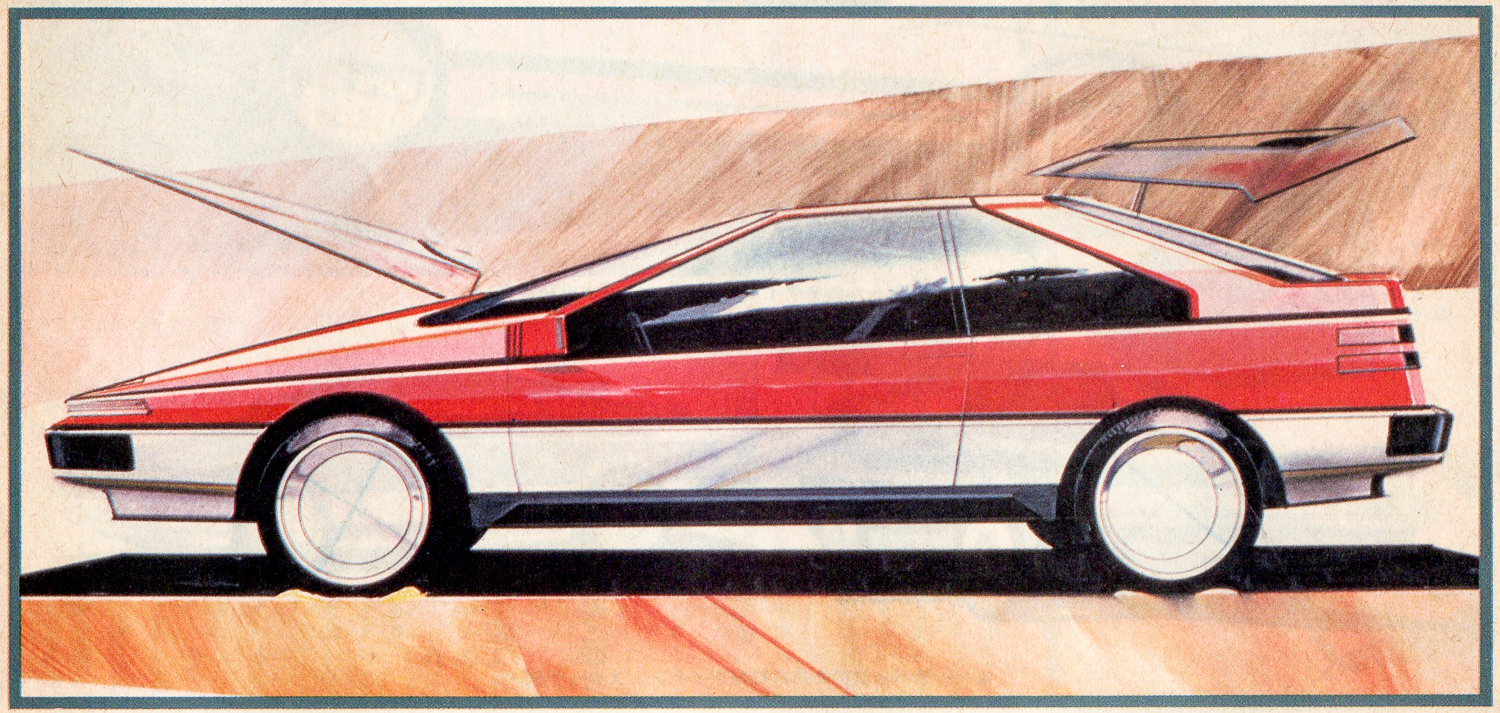
Improve your proportions first. New Silvia/Gazelle
Akira: First, please tell us about the product concept or target market for the new Silvia/Gazelle.
Ashizawa: The first Silvia was released in 1965 (Showa 40). It was Japan's first specialty car, and has been popular with young people and new families ever since as a unique car, with a focus on nimble driving and functionality. The third generation had a balance of fashion and sportiness, but this time, it is even sportier. The aim was to strongly emphasise its elegance. The styling was also in that direction, with great consideration given to aerodynamics, and I think it's fair to say that this is a car that thoroughly pursues functional beauty.
Akira: Are you targeting the same demographic as before, or would you like to broaden it further?
Ashizawa: I'm not sure if it will ultimately spread, but we are very conscious of the younger generation.
Seki: 20's. This hasn't changed at all.
Akira: Although we are in the same demographic, we would like to be more accepted.
Ashizawa: Yes, that's right. Nowadays, with the diversification of cars, there is a trend towards high performance and economical. The car is clearly designed to be economical and easy to drive, but it is also orientated towards high performance. The result is sportiness and fashion, and this is true for hatchback and coupe.
Akira: Is it in the Japanese market? Or is it globally conscious?
Ashizawa: Both. In the Japanese market, this type of car tends to be a fleeting success, but we don't want that to happen. We wanted to make it a more valuable product, so we focused on the domestic market first. However, in terms of volume (sales volume), North America is the biggest market, so we're also conscious of that.
Akira: In Japan, there is certainly a trend towards high power and sporty cars, but what about in America?
Ashizawa: It's the same in America.
Akira: With that product concept in mind, how was the styling developed? I think the biggest issue was what to do about the image of the previous model. If we were to completely change it, in what direction should we go?
Ashizawa: The previous model was very well received at first, and sales were quite good, but while people appreciated its sharp, urban newness, there were also complaints that it was too over-body (the body was too big compared to the suspension). I think this was also written about in a Car Styling Magazine. Also, from a functional standpoint, there were complaints that the trunk was too small and there was too little head clearance, so we wanted to eliminate these issues first. So this time, I think the proportions have improved a lot.
Also, we wanted to make the silhouette sharper, just like the old model, but we also wanted to make the surfaces smoother, so I think these were the main aims.
Akira: Could you explain what Sharp is a little more simply?
Ashizawa: In short, it's about a clear shape. For example, we incorporated a wedge-like design, but if the entire car leaned too far forward, it would look unstable, so while the line above the body is wedge-like, there is a clearly horizontal line running from bumper to bumper. The engine hood is lowered, the windshield is more inclined than the previous model, creating a very rhythmic cabin with light lines contrasted with horizontal lines at the bumper, emphasising sharpness and stability. Aerodynamics was also taken into consideration from the start, and the entire design is unified with flush, smooth surfaces from the front to the rear.
Specifically, the dimensional improvements to the package are as follows:
The driver's head clearance has increased by 20 mm, and the rear seats have been extended by 100 mm both front and rear. Basically, the wheelbase was shortened and the overall height was increased. The tread has been widened, which has resulted in improved interior space and a stable, stylish look.
Hard, but elegant.
Akira: The old model was based on Violet (Nissan Violet chassis), but this time?
Ashizawa: The main components are the same as those of the Bluebird, but if you were to say what the base is, it would be better to say that it is an improvement on the previous model.
Akira: The second generation was the Sunny, the third generation was the Violet, and now it's the Bluebird. They're getting more and more impressive (Laughs). This time, the hatchback and coupe were announced at the same time, but which one is the main model, or the one that sells better?
Ashizawa: That would be the coupe. With the previous model, the hatchback was designed first, then the coupe, or rather, the hardtop as it was called at the time, came out first, followed by the hatchback.
Akira: I thought so. The image leader of the previous model was the hatchback, which had a better balance of proportions.
Ashizawa: It's true that the hatchback was more refined. The notchback was a bit rushed. But this time they were both released at the same time. However, it was the hatchback that inspired the image. I wonder if it's easier to sketch.
Akira: In the case of a notchback, the rear pillars must be difficult to get right. As you can see in the sketch, even though it's the same hatchback, the image is quite different this time. Is this drawn by a younger artist?
Ashizawa: I was 27 at the time, about 5 or 6 years out of school. It was my first time working on a full-frame camera.
Akira: It's like a supercar-like speciality, and this one is really sturdy.
Seki: That's what I meant by the sporty orientation mentioned earlier…
Wei Ze: It's more on the hard side…
Akira: Still, this hatch looks pretty big.
Ashizawa: I want to emphasise this point. I don't think there are many examples of something this big. It has plenty of power and is elegant, or something like that.
Akira: Okay.
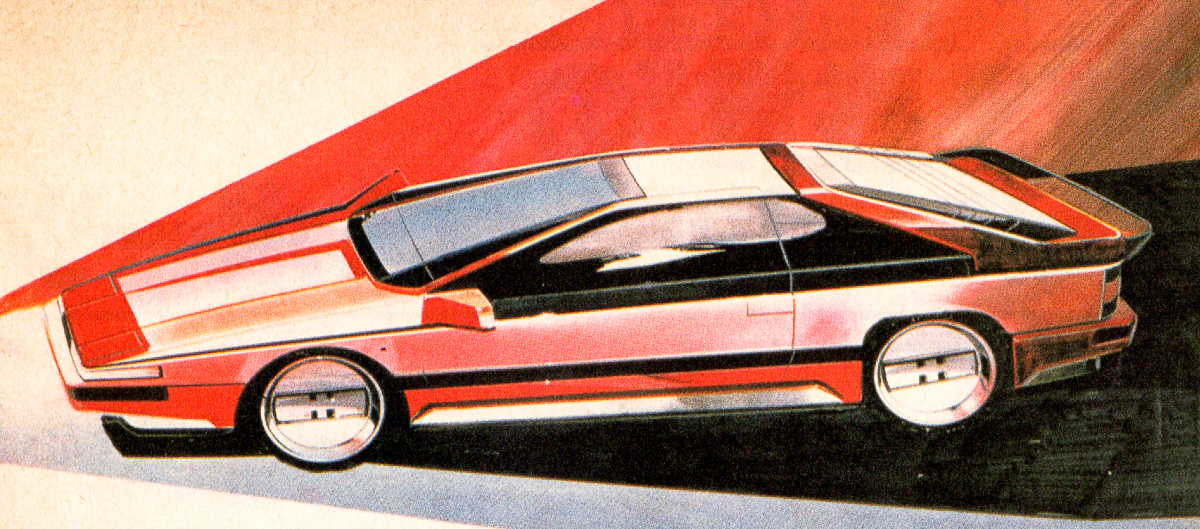 The design of the Silvia/Gazelle started from this sketch.
Ashizawa: Recently, hidden turbos have become popular, and it's about not making the turbo too obvious. That's the idea behind this model as well. We didn't want it to be exposed.
Akira: Casually powerful…
Seki: That's the feeling. I don't think there's anything sporty about it. Maybe that's just the nature of the Silvia…
Sleek, elegant and urban?
Akira: The old model was a little thin and slender. It was a bit slim. This time it's completely different. Does this mean you've reflected on it?
Ashizawa: The Silvia is originally elegant. Sporty and elegant…
Seki: The image of the Silvia is somewhat elegant compared to other sporty cars. This is an important target. That's why we intentionally left it as it was. But this time, if we had to say, we took it in a slightly more enthusiastic direction…
Ashizawa: Before you start designing, we discussed a lot of things. We talked about what kind of image the Silvia should have. Words like “cool”, “elegant”, and “stylish” came up. We also discussed the future of specialty cars from the late '80s to the '90s, and we felt that values would shift from material things to the heart. In that context, we also discussed the idea that Japanese specialty cars are cool and urbane.
The old model was originally marketed with an urban image, but there are many different interpretations of what urban means. For example, young people who come to Harajuku probably don't think of themselves as city people, and have never even thought about the city.
However, when you think about cities from a rural perspective, a certain concept emerges: the concept of a city. There has been some discussion about whether specialty is close to the concept of a city.
Seki: There's some interesting data comparing the Silvia with the Celica. The Silvia's users tend to be blue-collar workers, at 46% compared to 22% for the Celica. And among female users, the Silvia's share is 16% compared to 8% for the Celica. This is also quite striking. This data shows that the image of the Celica and Silvia is clearly different.
Ashizawa: Here too, there is an image of a very abstract city.
Akira: On the contrary, the word “high-tech” never came up in the Silvia.
Ashizawa: It's a very interesting difference in image.
Seki: You often see young people with crisp creases in their white trousers, white leather shoes, and permed hair, and Silvia has a firm grasp on these young people as well. This is an important point. (Laughter)
However, this time I also intended to include the tastes of wealthy young people in the city, such as those who like to wear jeans or wrinkled cotton pants.
Ashizawa: For example, there is the macho, urban type, but the Silvia doesn't fit into that at all. So the image he just described is a perfect fit for the Silvia. That's how it's been.
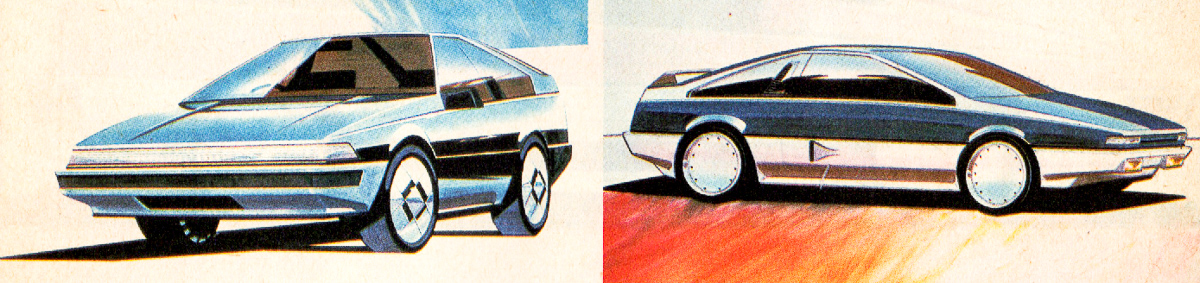
Examples of early sketch ideas for the Hatchback.

Akira: Is the single user you just mentioned the major one for the Silvia? If that's the direction we're heading in, we need to be confident in the numbers. As a product, that is.
Seki: It's about volume. Small cars account for 10,000 to 130,000 units per month (in the Japanese market). Specialty cars make up 10% of that. That means the overall market is 12,000 to 13,000 units per month. Initially, it was just the Silvia and Celica, but now there are so many. With so many cars competing, I think we need to make sure we stand out. In other words, there are so many different types, and just having a specialty car is no good. We need to have a solid plan and focus on a certain target.
For example, when I look at the people coming to the drive-in around Ebina on the Tomei Expressway, I notice that there are a lot of people with permed hair and wearing white pants. Don't you agree?
I don't know what the volume would be if you calculated it in numbers, but this is a demographic that absolutely cannot be ignored.
America's favourite power bulge
Akira: That's clearly different from people who drive Bluebird hardtops.
Seki: It's different. It's also different from the Skyline. So, to put it in nicer terms, rather than driving a car, I think you should drive it like you're wearing something, or think of it as fashion.
Akira: I see. So, let's ask specifically how the styling, including the fashion aspect, was developed. It seems that the biggest change in the image was the front end…
Ashizawa: Yes. The idea was to make the front end as thin and wide as possible. Initially, there were two proposals: one that used very thin, wide lenses from top to bottom, and the other that used retractable headlights. In the end, we went with retractable headlights, but the idea was to make them thin and low, with rounded corners and a smooth overall design to allow air to flow more easily.
Recently, many companies have been using covered lamps, which has resulted in a lack of face, or rather, a stereotypical front end, which is causing problems.
Akira: It seems so. The new Silvia/Gazelle also has no eyes or faces…
Ashizawa: The previous model had a very unique face, with things like jet air intakes. Some people liked that uniqueness, while others thought it was too cluttered, so we ended up tidying it up a bit during the minor change. So, with this model, which is an extension of that, we tried to make the front as visually unnoticeable as much as possible. The idea was to make the front not just the front, but the front within the whole…
In other words, it's fine if the radiator grille doesn't make a strong impression… But with all these changes, it's hard to tell what nationality it is. (Laughs)
Akira: Are you trying to preserve the traditional Silvia through its scent?
Ashizawa: The overall image is what remains.
Akira: The thing that catches my eye the most about the style is the twin cam turbo power bulge…it even has a dummy duct attached.
Ashizawa: For people who feel that the front is too plain, a bulge is effective.
Akira: Was it? Do you want a macho look?
Wei Ze: That opinion was there.

Examples of early sketch ideas for the Coupe
Akira: I'm concerned about how silly the covered headlights look when they pop up, but is that really how it should be as a design highlight?
Ashizawa: At first, the lens was positioned higher, but we had to work hard on the design to make it function properly in a position that didn't protrude too much.
Akira: When you pop up the lights on cars from all manufacturers, it looks like the lights are installed without any hassle under the cover. I think it would be better to have a more stylish design, or to have a smooth, flush lens when you open it.
Ashizawa: I see.
Dramatically improved aerodynamic characteristics.
Akira: Moving on to the rear, I think the rear view of the coupe this time has a very calm atmosphere, but when viewed from the side, the deck line appears to be slightly lowered. What's this…?
Ashizawa: This isn't a case of lowering the car, but rather a design concept for the car. If you look closely at the actual car, it doesn't really give the impression of being lowered. It feels more like a high deck.
Seki: We would say that it has been lowered or contained.
Akira: So if you level the deck it looks extremely raised?
Ashizawa: That's right.
Seki: We also took care to ensure that the fold line of the rear window does not suddenly end.
Ashizawa: When you look at it from the rear view, recently, there are cars with rear lids that look very high, but this is not necessarily a good fit. We were also conscious of this, especially in terms of how it looks from the rear.
However, it's also the latest fashion to have a big, standing-like appearance.
Seki: Another reason for this is that the Coupe's customers are older.
Ashizawa: Yes, it caters to teenagers too. It's not just high-quality, it's wide-ranging.
Akira: We were talking about sharpness earlier, but this time the radius of the edge is larger than the previous model.
Ashizawa: The old model was very sharp. In fact, when we were making the clay model of this car, the radius was slightly larger than the production model. We gradually brought it back to its original shape.

Concept Models
Left: Coupe Design B - Features include fixed headlights and black C-pillars.
Right: Coupe Design A - Almost identical to the production model, except for the front grill.
Akira: Do you feel uncomfortable?
Ashizawa: The whole thing ends up looking chunky. I wanted the silhouette to look very sharp, so missing that target would have been bad.
Akira: Perhaps because the radius was carefully considered, the stiffness of the previous model has been lost and the car has a much more refined feel. I've heard that the aerodynamic characteristics are also quite good.
Ashizawa: Figures are 0.34 for the hatchback and 0.36 for the coupe (drag coefficient). In reality, I think the values are a little better.
Akira: What is the target value?
Ashizawa: It's 0.33. According to the Experiment Department, the actual measurement this time was 0.33, but I don't really understand why they chose 0.33.
Akira: Do you know the old model?
Ashizawa: 0.42 (Hatch) and 0.47 (Coupe). That's pretty bad. So this is a big step forward.
I want to be popular with women too!
Akira: It's clear that the exterior design is sharp and has good aerodynamic characteristics. What aspects of the interior did you pay particular attention to?

Concept Models
Left: Hatchback Design B - Its distinguishing feature is the large glass hatchback.
Right: Hatchback Design A - The top choice.
Seki: The exterior is slightly sporty, it leans more toward the T-shirt style… I'm a bit short on vocabulary here, and I don't think there are any better words for it… Anyway, while that's the direction we're heading in, the interior is intended to have a fun or colourful image. I mean, we deliberately avoided the high-tech or hard feeling that sports cars have…
Akira: Consciously?
Seki: I wanted to convey a warm, timid feeling.
I want to be seen by women. In your heart? (Laughs)
Seki: Yes, that's true. The Silvia is popular in North America as a “secretary car.” Female secretaries use it to commute to work.
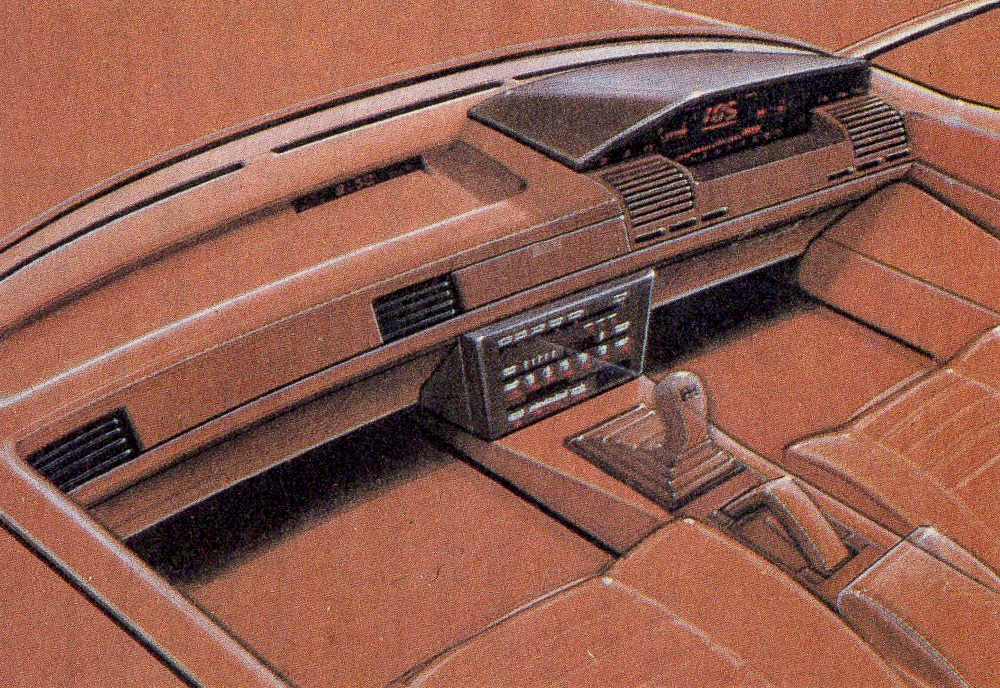
Anyway, the initial idea was to surround the human body with soft padding. As shown in the early clay model, a strip of padding connects the dashboard to the door trim. The ultimate goal was to go instrument panel-less, with only the necessary meters fitted, and we wanted to make the meter hood as inconspicuous as possible.
In the production model, the instrument panel pad slopes down toward the door trim, which is slightly misaligned with the outer belt line. A small triangle is visible from the outside, but it's not noticeable because of the door mirrors.
Akira: In that case, wouldn't it be more natural to lower the dashboard?
Seki: This part is regulated from the outside as well, and the conditions for the air box and other things are strict, so it's difficult to lower it.
Akira: I think there is a way to make it clearly tray-shaped, with a curved wall on the front like this.
Seki: That's one way of doing it. I didn't do that because I wanted to keep the surface relatively simple.
Akira: The top of the dashboard is a bit dull for a tray.

Interior Concepts
Left: Second mock-up, design B. It featured a unique two-tiered design on the top of the dashboard, but it was removed to maintain consistency with the exterior's overall image.
Right: Second mock-up, design A. It features a low meter hood and a generously sized safety pad. The aim is definitely to create a fancy look.
Seki: It actually functions as a tray. However, survey results show that users don't put much on top of it, except for perfume at most.
Akira: It's not a storage shed, Seki
Seki: Yeah, I'm confident. (laughs)
And the stitching on this pad. It wasn't there at first, but I added it at the end. Wood grain and stitching are not popular with professional designers or critics, but they are popular with the general public. This is very effective. I know it has become a common practice, and people might say, “Here we go again.”
Akira: This time, the steering wheel is good for the Turbo and RS series.
Seki: This has been fairly well-received, but it was a success by adding depth to the upper part of the so-called center pad surface. I always think that the key to a steering wheel is how you create space there. This type is based on the idea of bringing the space inside directly toward the instrument panel.
Akira: Recently, there has been a trend to place elaborate switchboards in front of the instrument panel, but the new model doesn't have that feel.
Seki: It was one of the ideas, but the concept this time was a sense of expansiveness, and the idea was to envelop people, so we placed emphasis on the flow in the left and right directions.
Akira: I want to stop the driver's seat from being closed off…
Seki: That's right. The thing we struggled with with the interior was what to do about the flashiness of the previous model, especially the flashy lighting at night.
Akira: There were some photos in the catalogue that showed that they had put a lot of effort into the illuminations this time as well…
Seki: I used the seki-ki technique, but the area is different. This time it's much smaller. In terms of visual function, it's easier to concentrate, so I think it's good.

Interior Concepts
Left: Mockup of a molded door.
Right: Third mockup. This was approved as the final design and production began. The adoption of the new boot design was decided after this.
What will you be promoting in the future?
Akira: It's true that the instrument panel is smaller and not as flashy as the old model, but the overall atmosphere is still quite good.
Seki: I feel it has a flashy look that is hard to miss. Even the boot on the shift lever has a strong presence. (laughs)
Ashizawa: Stepped boots are just too obvious.
Seki: This was a difficult project. You don't know until you make it how the cross section will look, or how it will stay in place when it shifts. We tried out a variety of designs using Yamakan, and this was the best.
It's a little bulky, but it feels new. It feels like part of the center console.
The surface is embossed, and rather than just having a boot placed on top like before, it gives the impression that part of the console has become the boot.
Ashizawa: It's not as bulky as it looks in the photo. I actually think it's cute. (Laughs)
- Perhaps because the center console is spacious, the layout of the audio system has a somewhat handmade feel to it.
Ashizawa: It looks a little bulky.
Seki: That's right. They advertise it as having a luxurious, handmade feel and a high-quality feel, but personally I think it's a bit off-putting. But I think it will be well-received by the general public.
Akira: It's good that it doesn't have that cheap, stuffy feel.
Seki: It seems like we've reached a dead end with today's cars when it comes to what to focus on and what to highlight in the interior.
However, with the rapid advances in electronics, it feels like there's still a long way to go.
Seki: Placing audio equipment in front, adding lots of switches, and creating a luxurious feel with a neat finish is something that's already being done everywhere. I think it's about time something came out to replace this.
Ashizawa: It's true that things will likely change from now on, but the real problem is the unit, isn't it?
Seki: No, the unit can now be placed anywhere. In other words, the control system can be separated from the unit using optical communication, for example. Technically, that is. So the only reason to place something so complex right in front of it is for visual appeal.
Ashizawa: For example, there are things like the visibility zone and the entertainment zone, and as these are more or less determined ergonomically, electronics continue to develop, and new graphical processing methods emerge. In this case, the unit refers to size.
Seki: For example, we now see switches on steering horns. Switches and other controls can be more centralised. The units don't need to be visible. If a CRT or something similar were to pop up instead, it would all fit together. But we haven't gotten that far yet. It will be interesting to see how this changes.
The direction is to hide all the complicated functions and make the exterior simpler. It is high-end. It would be good if the recognition that it is high-tech was established.
Simpler designs are probably better from an ergonomic standpoint, and I think that trend is starting to emerge in European show models.
Ashizawa: That's right. There are an increasing number of people among us designers and young users who think like this. However, there is still a big gap between this and reality. For example, unless there are drastic changes in lifestyle…
Akira: Well, even if that's impossible, it is possible to gradually make the controls and instrument panels, which have traditionally been busy, simpler and more luxurious. Was this a trend you were aiming for with this model?
Seki: No, not really. It's lively. It tends to lean more towards materialistic values than spiritual values. To be honest.
Akira: Can't you escape from things?
Seki: It's not that we can escape, but rather, customer demands remain strong. We're in an age where we're moving away from material things, but if you can't see the things, then…
Ashizawa: While simplicity and newness are important, elegance is also important.
However, I don't like things that are too impressive.
Akira: Speaking of impressive, the seat patterns are bold this time. There are some purely Japanese designs too. (Laughs)
Seki: I think that's because I wanted to make the atmosphere inside a little more cheerful.
It would probably go well with white pants too (laughs).
It's been well received domestically, but something else would be better for North America.
Akira: I thought it would be the other way around. It's popular in North America, but not so much for young people in Japan.
Seki: We believe it will be popular with the young people we envision. Patterns that gradually change in appearance are popular with Japanese people. In America, it seems that people prefer patterns with strong contrasts.
Akira: Wouldn't this checkered pattern look better in a larger pattern?
Seki: We made a variety of sizes, big and small. The person who designed the pattern on this seat was a woman.
Akira: What's her name? How old is she?
Seki: Hiroe Kaikohashi. She's 23 or 24. She graduated from junior college and is still single. She's a lovely girl. She's a new addition to our company. (Laughter)
Akira: I wonder why they didn't bring that person in. I'd love to have her appear in the next design interview.
Seki: The seats are a crucial selling point, so we put a lot of effort into them. There are two types, one of which has a slightly stronger bucket feel. It also has a large overhang.
Akira: There are several colours to choose from?
Seki: Two colors. Well, strictly speaking, in Japan, there are three colours. Because there is black.
Akira: In terms of color, the instrument panel and door trim seem to have been given more attention than the seats.
Seki: It's been praised as an interior that really brings out the colours, and it feels like the colour designers played an active role.
Akira: It's best not to be flashy or gaudy. Just in moderation.
Seki: We did it moderately. We did as much as we could within the limits of what was allowed in the interior of the car.
Akira: I like that they don't use raw browns. Japanese manufacturers tend to use browns rather carelessly, which I think is difficult to create an elegant feel.
Seki: The body colour comes in achromatic, warm, and cool tones, and the interior is equipped with corresponding colours. Brown and beige are examples of colours that can be used to match the warm tones.
Akira: I often see cars with the entire dashboard in brown tones, but the colour varies slightly depending on the material. This doesn't harmonize well and takes away from the sense of quality. In that respect, the colour of the dashboard on this Silvia is nice.
Finally, regarding the design sources, did NDI (Nissan Design International, La Jolla, California, USA) collaborate on this project?
Wei Ze: Not at all.
Akira: Didn't you have a competition?
Ashizawa: Since we started Kansai Development three years ago, NDI couldn't have been involved in this project, timing-wise.
Hanazawa: It was in operation, but I wasn't participating in this. Specifically, NDI is not operating in a competitive manner with these kinds of projects. We are working on more advanced concepts.
Akira: I see, I understand perfectly. Well, that's about it for now…
(End)
Return to New Model S12